Paddy Collins
Man on FirePaddy Collins is an Australian traveler whose decisive act is to stay with Creasy when Wally Wightman urges them to escape. After learning that Pinta Balletto was murdered, she rejects flight and declares that Creasy should not face his pursuit alone. Her brief arc turns on a choice between self-preservation and solidarity, ending in tears when she sees him fully armed and understands what he is about to do.
Identity and Background
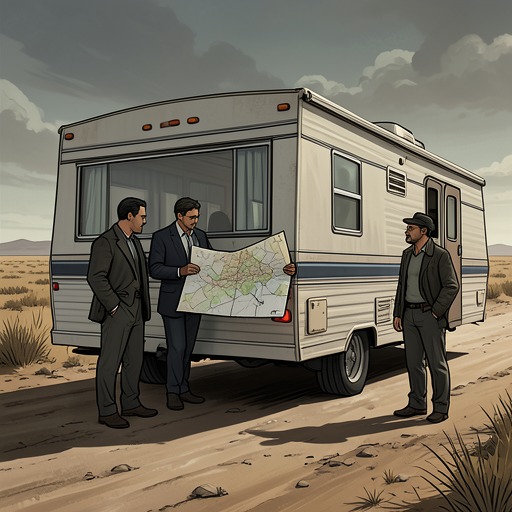
Paddy and Wally are Australians who have traveled to Europe to broaden their minds and have met along the way. In late summer in Rome, they sit on a high curb beside the only mobile home parked near the Australian Embassy, waiting for a customer. The narration describes Paddy as being in her early thirties, large in stature but not unattractive, and wearing a peasant dress. Wally, by contrast, is a perennial student who has found temporary work teaching English at a night school in Turin. The account gives no comparable occupation for Paddy; it defines her instead through her partnership with Wally and, later, her independent decision about whether to leave.
The News and the Decision to Stay
Paddy’s involvement with Creasy sharpens when she sees his face on the front pages of a dozen newspapers. An hour later, she and Wally are arguing fiercely. He urges her to take the money and passports in her bag, go straight to the railway station, buy what they need in Brindisi, and catch the boat to Greece the next morning. She refuses. The escape plan makes the immediate stakes plain: they can leave, but doing so means abandoning Creasy as the authorities and others close in.
Paddy acknowledges that Creasy has been using them, but treats that fact as no reason to withdraw. She argues that he is alone and needs help, then connects his campaign to Pinta’s fate: the people he is pursuing raped and killed the eleven-year-old girl, and are now being made to pay. Her words, “If he needs a little help, he'll get it from Paddy Collins,” turn sympathy into a commitment. When Wally asks why she would get involved in something that is not their business, she answers, “When did an Aussie ever need a reason to get into a fight?” She ends the argument by telling him she is not leaving Creasy on his own. The choice is hers, not an extension of Wally’s plan or permission.
Wally and Paddy
Their disagreement exposes a difference in how the couple responds to danger. Wally focuses on the practical route out: money, passports, a train, and a boat. Paddy sees the same danger but gives greater weight to the killing that prompted Creasy’s pursuit and to his isolation. Her decision strains their immediate accord—she tells Wally he can do what he likes—but the evidence does not establish that they separate or that their relationship ends. What it does show is Paddy asserting a moral judgment of her own, even when her partner argues for retreat.
Witness to Creasy’s Preparation
Later, Paddy and Wally wait beside a Lancia as Creasy returns from the Mobex wearing his old camouflage combat uniform, still marked with the insignia of the 1st R.E.P. His webbing carries two rows of grenades, and a holster hangs from his belt. Paddy begins to cry softly. She and Wally already know who Creasy is and what he intends to do, but his appearance makes the reality of his preparation immediate. Her tears do not undo her decision to help; they register its human cost as the man she chose to stand by becomes visibly ready for violence.
Narrative Role
Paddy’s contribution is not a displayed act of combat or a detailed operational role. The story gives her a consequential decision: when the headlines make Creasy’s danger public, she refuses to turn away from the violence done to Pinta and from the man pursuing those responsible. Her resolve is expressed in a direct promise of help, while her final tears prevent that resolve from reading as casual bravado. Together, the refusal to flee and the reaction to Creasy’s armed appearance make her a measure of the campaign’s moral appeal and its frightening cost.